Brushless DC (BLDC) motors are now widely used in applications where compact size, efficient operation, accurate speed control, and dependable performance are important. They can be found in electric vehicles, cooling systems, industrial equipment, drones, household appliances, pumps, robotics, and many other products. As demand for these motors continues to grow, manufacturers are under increasing pressure to produce consistent quality while keeping production times and costs under control.
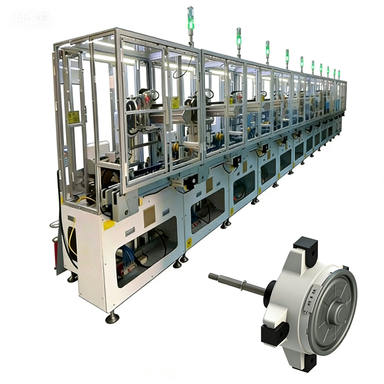
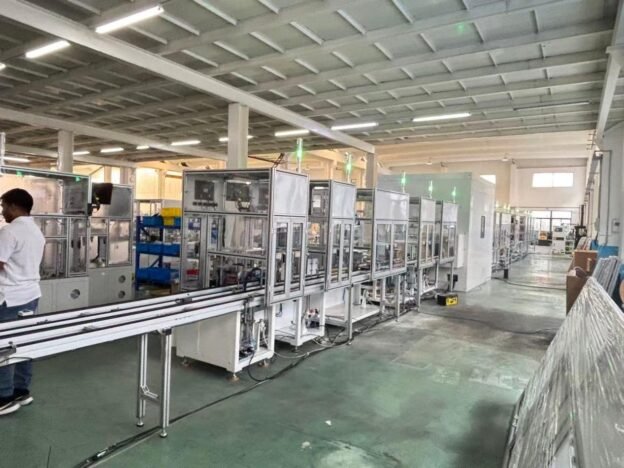
Motor assembly is one of the most important stages in the manufacturing process because even small variations during assembly can influence the final performance of a motor. Components such as the stator, rotor, bearings, magnets, housing, and wiring must be positioned correctly and assembled with suitable force and accuracy. A modern bldc motor assembly machine can help manufacturers organise these operations more consistently, particularly when production volumes are high and repeatability is essential.
Why Accurate BLDC Motor Assembly Matters
A BLDC motor may contain relatively compact components, but each part has a specific role in determining how the finished motor performs. The rotor must rotate smoothly inside the stator, the bearings need to be properly seated, and the magnetic components must maintain their intended position. At the same time, electrical connections need to be secure and correctly routed.
Manual assembly can be effective for small production runs or specialised motors, but it can become more difficult to maintain consistent results as production volumes increase. Human operators naturally have differences in working speed, applied force, positioning accuracy, and inspection habits. These variations do not necessarily create problems in every motor, but over a large production batch they can contribute to inconsistent quality.
Automated assembly equipment addresses part of this challenge by controlling repeatable operations according to predefined settings. Depending on the design of the production line, equipment can assist with component positioning, bearing installation, rotor insertion, fastening, pressing, testing, and other assembly tasks. The objective is not simply to make the process faster. More importantly, it is to make critical operations more controlled and measurable.
A well-designed assembly process can also make quality problems easier to identify. If a machine monitors parameters such as pressing force, insertion depth, torque, or cycle time, manufacturers can use this information to identify deviations before they result in a large number of defective motors.
How Modern Assembly Equipment Supports Production
The design of a BLDC motor assembly system depends heavily on the motor’s construction, dimensions, production volume, and required quality standards. There is no single machine configuration that is suitable for every manufacturer. Instead, assembly equipment is normally developed or configured around the specific components and operations involved.
One important advantage of a bldc motor assembly machine is repeatability. Once the correct operating parameters have been established, the machine can perform the same movement or assembly operation repeatedly. For example, if a bearing must be pressed into a housing to a particular position, controlled equipment can apply a defined force and stop at the required depth. This reduces dependence on manual judgement during that particular operation.
Rotor and stator assembly also require careful handling. Excessive force, incorrect alignment, or unsuitable movement can damage components or create problems that may only become visible during final testing. Automated mechanisms can guide components along a controlled path and reduce unnecessary contact during insertion.
Fastening operations can benefit from similar control. Where screws or other fasteners are used, torque-controlled tools can help achieve more consistent results than manually tightening each fastener by feel. Consistent fastening is useful not only for mechanical stability but also for reducing variation between finished products.
Electrical assembly is another area where consistency is important. BLDC motors depend on correctly connected windings, sensors, terminals, and other electrical components. Depending on the production line, automated or semi-automated systems can support wire positioning, terminal operations, connection checks, and related processes. These systems can reduce repetitive manual work while helping operators focus on tasks that require more judgement.
Improving Quality Without Removing Human Oversight
Automation does not mean that operators are no longer needed. In practical manufacturing environments, people remain important for setup, supervision, maintenance, troubleshooting, quality decisions, and process improvement.
The most useful approach is often to combine automated repeatable operations with human inspection and decision-making. Machines can handle tasks that require consistent movement or force, while trained staff can monitor the process and respond when something falls outside the expected range.
This combination can also improve workplace organisation. Repetitive assembly operations can be physically tiring when performed continuously by hand. Moving suitable repetitive tasks to machinery can reduce operator fatigue and allow workers to concentrate on monitoring and quality-related responsibilities.
Key Factors to Consider When Selecting an Assembly Machine
Choosing assembly equipment should begin with the motor itself rather than the machine specification. Manufacturers should first map the complete assembly process and identify which operations require the highest level of accuracy or consistency.
Production volume is an important consideration. A manufacturer producing a small number of specialised motors may benefit from flexible semi-automatic equipment, while a high-volume production facility may require a more integrated automated line. The right level of automation should match actual production requirements rather than simply aiming for the highest possible degree of automation.
Component tolerances also matter. If bearings, shafts, housings, magnets, or other parts have tight dimensional requirements, the assembly system needs to accommodate those tolerances. A machine that works well with one component supplier may require adjustment if component dimensions or materials change.
Another consideration is process monitoring. Basic machinery may perform a mechanical operation without recording detailed information, whereas more advanced equipment can monitor and record production parameters. Traceability can be particularly valuable when manufacturers need to investigate quality issues or demonstrate that a production batch followed specified process conditions.
Maintenance should also be considered before purchasing equipment. A machine that is difficult to maintain can create unnecessary downtime. Manufacturers should examine access to wear components, availability of replacement parts, ease of cleaning, software support, and the skills required for routine servicing.
Flexibility is equally important for manufacturers producing different motor models. Adjustable tooling, programmable settings, and interchangeable fixtures can make it easier to adapt equipment to different products. However, flexibility should be balanced against production speed and machine complexity.
Building a More Reliable BLDC Manufacturing Process
An assembly machine alone cannot guarantee the quality of a finished motor. The overall manufacturing process must be controlled from incoming components through to final testing. Poor-quality bearings, inconsistent magnets, incorrect winding dimensions, or unsuitable materials can create problems that no assembly system can completely correct.
For this reason, manufacturers should treat assembly automation as one part of a wider quality system. Incoming component inspection, controlled storage, proper tooling, operator training, preventive maintenance, and final testing all contribute to consistent motor production.
Final testing is especially important. After assembly, BLDC motors can be checked for characteristics such as electrical resistance, insulation performance, rotation, noise, vibration, current consumption, and operating behaviour, depending on the motor’s application. Testing provides an opportunity to identify problems before the motor reaches the customer or is installed into a larger product.
Data from the assembly and testing stages can also help manufacturers improve their processes over time. If a particular production stage repeatedly produces deviations, engineers can investigate whether the cause is related to tooling, components, machine settings, operator procedures, or another factor.
Manufacturers should also establish clear maintenance schedules. Sensors, fixtures, pressing mechanisms, tools, and moving parts can gradually experience wear. Regular inspection and calibration help ensure that equipment continues to perform within the required parameters.
The Future of BLDC Motor Assembly
As BLDC motors become more common in electric mobility, automation, consumer products, and energy-efficient equipment, manufacturers will continue looking for practical ways to improve production consistency. The future is likely to involve greater integration between assembly equipment, inspection systems, testing stations, and production data.
Machine vision can assist with checking component presence and positioning, while sensors can monitor mechanical operations. Production software can record process information and help identify recurring issues. These technologies can make manufacturing more transparent without requiring every part of the process to be fully automated.
The most valuable developments will not necessarily be machines that simply operate faster. Equipment that combines accurate movement, sensible automation, process monitoring, easy maintenance, and compatibility with existing production systems can provide more practical long-term value.
For manufacturers, the goal should be to create an assembly process that is stable, measurable, and suitable for the specific motor being produced. A properly selected bldc motor assembly machine can contribute to that goal by improving repeatability in critical operations and reducing unnecessary variation.
Ultimately, successful BLDC motor manufacturing depends on the interaction between good component quality, controlled assembly, skilled personnel, reliable machinery, and effective testing. When these elements are managed together, manufacturers can build a production process that is more consistent and easier to monitor while remaining realistic about costs, maintenance, and product requirements.